Conocer la máquina · Preguntas de compra · · 6 min de lectura
How to Buy a Used Sany or Zoomlion Concrete Pump Truck
Check the boom, hydraulics and pumping system, verify the model and serial number, and compare the total cost before buying a used Sany or Zoomlion pump truck.
La versión en Español aún no está redactada. Abajo se muestra el original (English).
How to Purchase a Used Sany or Zoomlion Concrete Pump Truck: A Practical Buying Guide
Concrete pump trucks are among the most critical—and costly to maintain—pieces of equipment on a construction site. Sany and Zoomlion are currently the most widely used brands, and a large number of their units are available on the secondary market. While purchasing a used pump truck can reduce initial investment and allow you to begin operations sooner, a poor choice can lead to exorbitant repair costs and project delays. This guide outlines the key factors you should inspect before making a purchase.
Why Choose a Used Sany or Zoomlion Pump Truck?
Buying a new pump truck often entails long production and delivery lead times, as well as a significant upfront capital investment. A well-maintained used unit offers comparable pumping capacity at a fraction of the cost and is typically available for immediate delivery. For contractors, rental companies, and ready-mix concrete suppliers looking to expand their fleets, purchasing used equipment is a pragmatic way to increase operational capacity without overextending their budgets.
Both Sany and Zoomlion are established manufacturers of construction machinery, and their pump trucks are a common sight on job sites worldwide. This ensures that many technicians are familiar with the equipment, and spare parts are generally easier to source compared to less common brands. Nevertheless, the actual condition of an individual unit is far more important than its brand name.
Step 1: Verify the Model, Year, and Serial Number
Request the following details from the seller and cross-reference them with the nameplates found on the chassis, the pumping unit, and the boom:
Brand, model, year of manufacture, and serial number
Chassis brand and model, vehicle mileage, and engine operating hours
Cumulative volume pumped or total piston stroke count (if such records exist)
Maintenance and repair history
Previous projects, operating environments, and the reason for the sale
Cumulative pumping volume is a better indicator of wear and tear than the age of the equipment. A newer unit that has been subjected to high-intensity use may be more worn than an older unit that has seen less frequent operation. If the information on the nameplate does not match the documentation, be sure to ask the seller for an explanation before proceeding with further discussions.
Step 2: Choose the Appropriate Boom Length
First, consider the type of projects you typically undertake. Concrete pump trucks come with booms of various lengths; the right specification depends on the nature of your regular work.
Pump trucks with shorter booms are easier to maneuver and set up in the confined spaces of urban construction sites, making them well-suited for residential and small-scale commercial projects.
Medium-length boom pumps are versatile enough to cover most standard construction projects.
Long-boom pumps are designed for high-rise buildings and large-scale construction sites; however, they require more space for deploying outriggers and demand a higher level of operator experience.
While the model names of Sany and Zoomlion pump trucks often indicate the boom length, always verify the actual specifications via the equipment’s nameplate and official documentation—do not rely solely on the title provided in a sales listing. Additionally, check the maximum pumping capacity, maximum pumping pressure, and the number of boom sections. Selecting equipment that exceeds your actual requirements will not add value; instead, it will only lead to higher fuel, transportation, and maintenance costs.
Step 3: Inspect Key Components
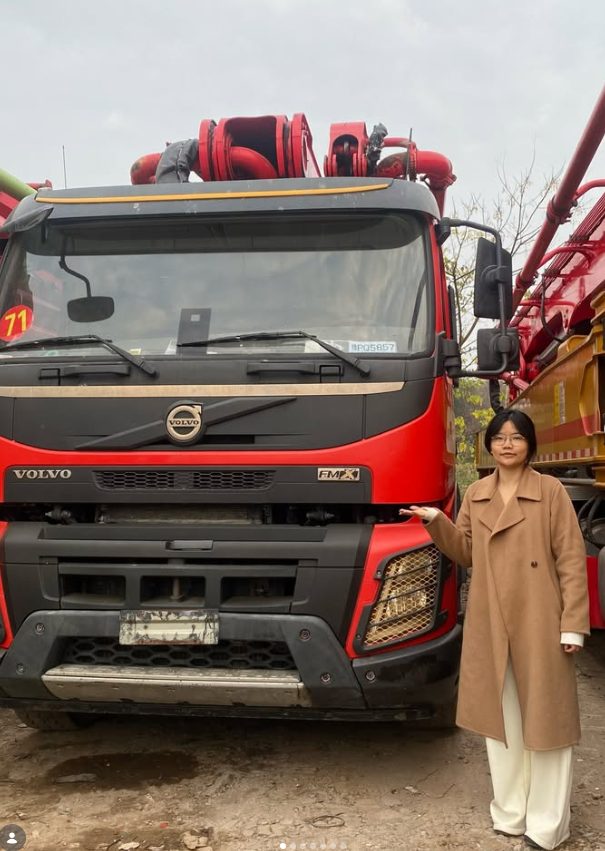
Whenever possible, inspect the equipment in person, or have a trusted technician examine it for you. If an on-site inspection is not feasible, request a live video walkthrough from the seller, ensuring the equipment is shown in an operational state. Pay close attention to the following areas:
Boom and Boom Sections: Check for cracks, signs of welded repairs, bent components, or wear at the hinge points. As the most critical structural component, the boom requires a thorough inspection.
Outriggers and Chassis: Ensure the outriggers extend and retract smoothly, and check for leaks, rust, or damage to the frame.
Hydraulic System: Inspect the pumps, cylinders, hoses, and the condition of the hydraulic fluid. Look for leaks, unusual noises, or sluggish/uneven movement.
Concrete Cylinders and Pistons: Examine the inner walls of the cylinders for scratches, wear, or other damage. Wear plates and cutting rings: These are consumable parts that wear down with use. Check their clearance and level of wear, as they directly affect pumping efficiency and are frequently replaced.
S-valve (or swing valve): Inspect for wear, smooth operation, and any signs of leakage.
Delivery pipes and elbows: Check the wall thickness of the pipes. If the walls are too thin or severely worn, they could burst under pressure.
Hopper and agitator assembly: Check for cracks or wear, and ensure the agitator operates smoothly.
Engine and transmission: Perform a cold-start test. Listen for any unusual noises, and check for smoke, oil leaks, or overheating.
Electrical system and remote control: Test all control functions, the emergency stop mechanism, indicator lights, and safety guards.
Step 4: Request a test run
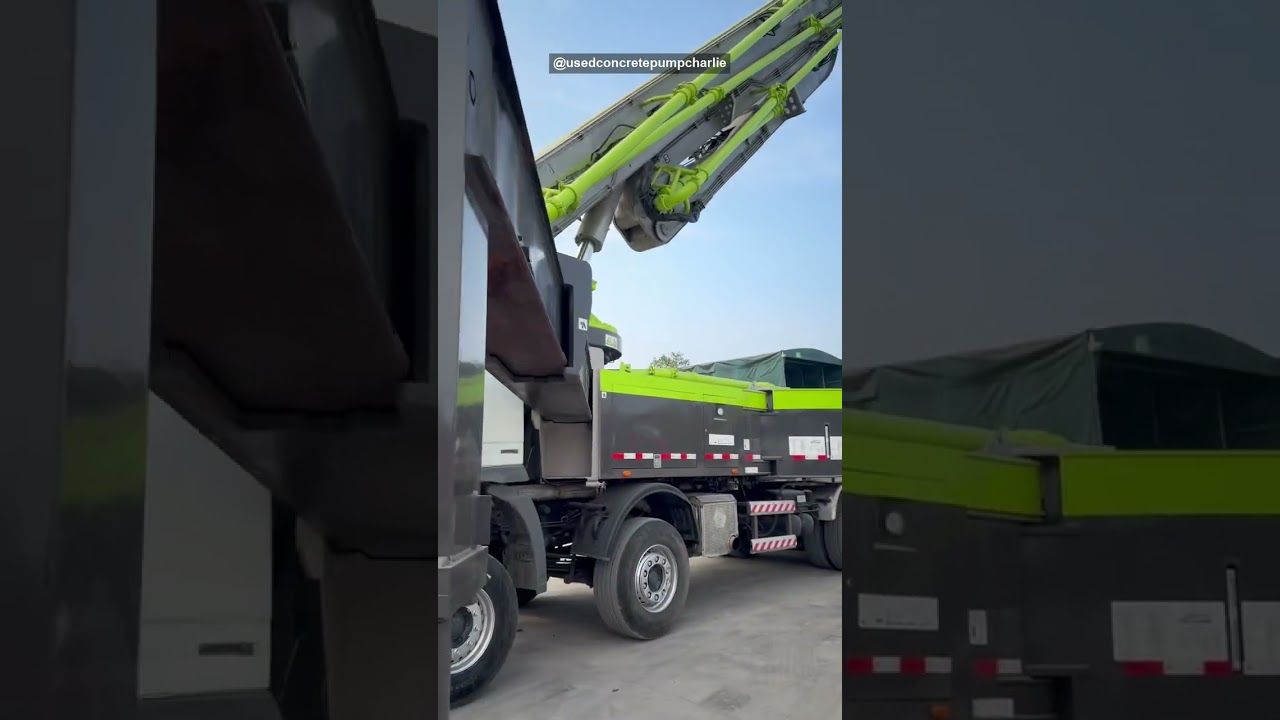
A test run provides far more information than photographs alone. Ask the seller to start the pumping system and cycle the boom through its full range of motion (extending and retracting). If possible, conduct a test pump using water or concrete. Observe whether the boom moves smoothly, the pumping pressure remains stable, the equipment sounds normal during operation, and there are no leaks. Additionally, verify that the boom does not drift when stationary and that all functions on the remote control respond accurately.
Step 5: Plan for spare parts and after-sales support
Before purchasing, identify which consumable parts (such as delivery pipes, wear plates, cutting rings, seals, and hoses) may need replacement in the near future. Ask the seller if they stock these parts for the specific model and inquire about the lead time for delivery to your location. If you are considering importing equipment (such as a concrete pump truck), confirm whether there is a local dealer or a qualified technician in your area capable of providing support for that brand. If the equipment breaks down and you cannot source replacement parts, the deal is not a good value—regardless of how low the initial purchase price may have been.
Step 6: Calculate the total cost
The purchase price is only one component of the total cost. You should also take the following costs into account:
Transportation (including sea/land freight) and export packaging;
Import duties and costs related to local regulatory compliance;
Replacement of wear parts and necessary repairs;
Repainting, insurance, registration, and operator training.
In the long run, a piece of equipment with a lower purchase price but significant wear and tear may end up costing more than a well-maintained unit.
Step 7: Confirm the Contract and Relevant Documentation
Ensure all terms of the transaction are clearly documented in writing, including the equipment model, serial number, condition, price, payment terms, delivery date, and any commitments regarding warranties or after-sales support. Always request registration documents, proof of ownership, operation manuals, and inspection reports. For cross-border purchases, verify all import/export requirements before making any payments, and be sure to use a secure payment method.
Common Pitfalls to Avoid
Purchasing equipment blindly without personally verifying its operational condition;
Focusing solely on the equipment’s age, brand, or price;
Overlooking the condition of the boom and welded areas;
Neglecting to check the availability of wear parts and spare components;
Failing to verify the relevant documentation and legal ownership.
Conclusion
Purchasing a used Sany or Zoomlion concrete pump truck can be a wise investment—provided the equipment aligns with your project requirements and you thoroughly examine its history, the condition of the boom, and the state of the hydraulic and pumping systems. Investing extra time in inspection and planning will not only help you avoid costly, unforeseen expenses but also ensure that you acquire a reliable machine ready for immediate operation.
Preguntas frecuentes
How do I check the boom of a used concrete pump truck?
Look for cracks, repaired welds, bent sections and worn pivot points, and test that the boom folds and unfolds smoothly without drifting.
Is the age of the pump truck the best way to judge its condition?
No. Pumped volume and maintenance history are better indicators of wear than age alone.
Which parts wear out most on a concrete pump truck?
Common wear parts include the wear plate, cutting ring, delivery pipes, seals and hoses.
What documents should I ask for when buying a used pump truck?
Ask for the registration papers, ownership proof, manuals, maintenance records and inspection reports.
Can I see the pump truck running before I buy it?
Yes. You should ask for a test run, either in person or by live video, and check the boom movement, pumping pressure and hydraulic system.
What costs should I include besides the purchase price?
Include shipping, export packing, import duties, wear-part replacement, repairs, insurance, registration and operator training.